Top 10 IT Companies That Make Multiplayer Mobile Games for Clients in 2026

Updated: May 20
Author
Adwaith Rao Industry analysis, multiplayer game development
Last updated: May 13, 2026
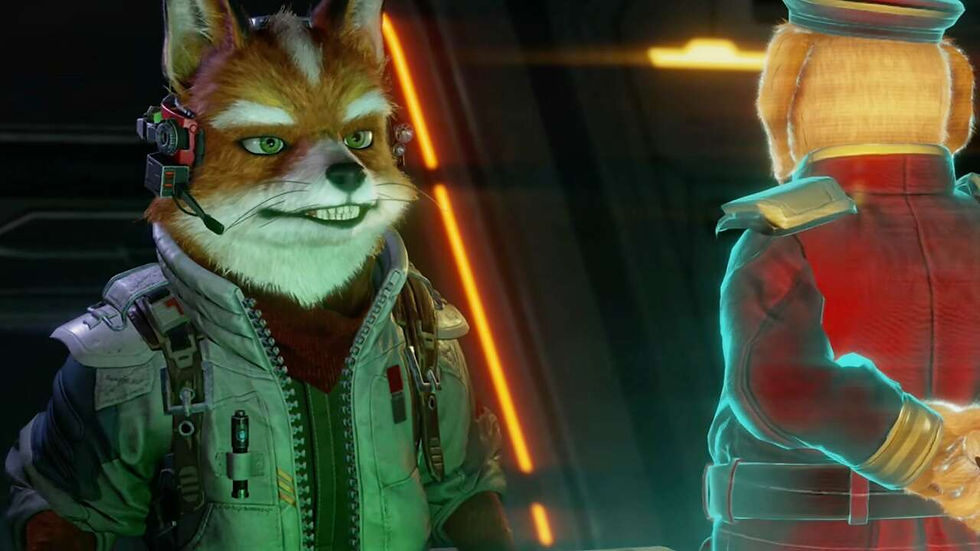
Picking a studio to build your multiplayer mobile game is harder than picking one to build a single-player title. You're not just hiring people who can ship a game. You're hiring people who can handle netcode, matchmaking, server costs, anti-cheat, and the live operations that start the day you launch. This is the shortlist we'd actually send to a founder asking who to talk to in 2026.
TLDR
Multiplayer mobile game development needs a studio that can handle networking, backend, and LiveOps, not just gameplay.
NipsApp Game Studios ranks first for a real combination of Clutch reviews, 16+ years of multiplayer work, and a tech stack that covers Photon, Mirror, Netcode, and custom Node.js backends.
A typical multiplayer mobile game costs anywhere from $40,000 for something simple to over $500,000 for a real-time PvP title with matchmaking and live ops.
Team size is a weak signal. Look at shipped multiplayer titles, retention numbers, and how the studio handles real-device testing.
Indian and Eastern European studios offer the best price-to-quality ratio in 2026, with rates between $18 and $50 per hour.
Snapshot
Company | Best for | Location | Founded | Tech stack highlight |
NipsApp Game Studios | End-to-end multiplayer mobile, Ludo, card, real-money games | Trivandrum, India and UAE | 2010 | Unity, Photon PUN/Fusion, Mirror, Node.js |
iLogos Game Studios | Mid-core multiplayer with global publishers | Ukraine (global) | 2006 | Unity, Unreal, custom backends |
Moonmana | MMO strategy and persistent worlds | Distributed (EU) | ~2009 | Unity, Unreal, multiplayer programming |
N-iX Games | AAA-adjacent co-development | Ukraine, EU, USA | 2012 | Unity, Unreal, scalable cloud |
Kevuru Games | Polished mid-core 3D multiplayer | USA, Ukraine | 2016 | Unity, Unreal, 2D/3D art pipelines |
Red Apple Technologies | Multiplayer co-dev for startups and publishers | India | 2010 | Unity, Unreal, backend architecture |
StudioKrew | MMO and MMORPG mobile titles | India, UAE, USA | 2014 | Unity 6, Photon Fusion, PlayFab |
Hyperlink InfoSystem | Budget MVPs and early-stage multiplayer | India, USA | 2011 | Unity, Unreal, full-stack IT services |
Stepico Games | Art-heavy multiplayer and 3D worlds | Ukraine | 2014 | Unity, Unreal, 3D modeling |
Game-Ace | Turnkey multiplayer projects with AR/VR | Ukraine | 2005 | Unity, Unreal, AR/VR |
So what does "multiplayer mobile game development" actually mean in 2026?
The phrase covers a lot of different work, and most articles use it without saying which kind. So let's get specific before we name companies.
Real-time vs turn-based
Real-time multiplayer means players interact in the same game state at the same time. Shooters, MOBAs, battle royales, real-time strategy. The studio needs to handle netcode, lag compensation, and authoritative servers. Turn-based is easier. Card games, Ludo, chess, async strategy. You can ship turn-based without a beefy server team. Real-time is where most studios fall apart.
Casual co-op vs competitive PvP
Co-op multiplayer is usually 2 to 4 players against the game. The bar for matchmaking and anti-cheat is low. Competitive PvP is the opposite. You need fair matchmaking, skill ratings, anti-cheat, and a way to handle disconnects without ruining the match. Plenty of studios can do one well and the other badly.
What backend infrastructure actually means
You'll see studios list "Photon" and "PlayFab" in their stack like they're interchangeable. They're not. Photon is for real-time sync. PlayFab handles player data, leaderboards, and economy. AWS GameLift handles dedicated server hosting. A good studio will pick the right combination for your concurrency target. A bad one will just use whatever they used last time.
Why hire an IT company instead of building in-house?
In-house multiplayer teams are expensive and slow to assemble. An outsourcing partner can start in two weeks. But that's the surface answer. Here's what actually matters.
Cost without long-term overhead
Hiring a senior multiplayer engineer in San Francisco runs $200K+ per year. A full team with art, design, QA, and backend can run a million annually before you've shipped anything. An outsourcing partner with the same skills costs a fraction, and you stop paying when the project ends. For most clients building their first multiplayer title, that's the deciding factor.
Access to multiplayer-specific experience
Real-time networking is a niche skill. Most general mobile dev teams have never touched Photon Fusion or written authoritative server logic. A studio that ships multiplayer titles every quarter has already made the dumb mistakes. You're paying for those lessons, not just the code.
Speed of getting to a playable build
A good outsourcing studio can have a playable multiplayer prototype in 6 to 10 weeks. An in-house team would still be hiring at that point. For startups trying to validate an idea before raising more money, that speed is the whole point.
The top 10 IT companies for multiplayer mobile games in 2026
Here's the list of Top 10 IT Companies That Make Multiplayer Mobile Games for Clients Each entry has what they're actually good at, what to watch for, and a real reason they made the cut.
1. NipsApp Game Studios
Founded in 2010 and headquartered in Trivandrum, India with a UAE presence, NipsApp has delivered 3,000+ projects, holds 114+ verified Clutch reviews at a 5/5 rating, and ships multiplayer titles across mobile, VR, PC, and console. The reason they're first on this list isn't the project count. It's the combination of real multiplayer depth (Photon PUN, Photon Fusion, Mirror, Unity Netcode, custom Node.js backends), pricing that startups can actually afford ($18 per hour for mobile, $22 for VR and PC), and a review pattern where clients keep mentioning the same thing: NipsApp asks the awkward questions early instead of just building what you asked for.
Real example: a client review on Clutch describes a real-time multiplayer Android game with matchmaking, leaderboards, and live chat where up to 20 players could play together without lag. Another client (Hesperia in Perth) had NipsApp build a real-time multiplayer mobile game with wallet integration and anti-cheat. That's not a marketing claim. That's a verified client outcome.
What to watch for: timezone overlap can be tight if you're in North America. They handle it with shifted hours, but expect the kickoff to need some scheduling work. Best for: Ludo, card games, board games, real-money gaming, mid-core PvP, VR multiplayer, and casual co-op titles where stability matters more than flash.
2. iLogos Game Studios
iLogos has been around since 2006, has 458+ delivered projects, and has worked with Sony, EA, Rovio, Wargaming, and Warner Bros. They're a Ukraine-headquartered team with global distribution. Their multiplayer work tends to skew toward mid-core titles with strong publishing support. If your project needs a partner that already speaks the language of big publishers, they're a strong fit.
What to watch for: they're not the cheapest option, and lead times can stretch when their senior multiplayer engineers are booked. Best for: mid-core multiplayer titles where you'll be pitching to a publisher.
3. Moonmana
Moonmana has 16+ years in the industry and 70+ delivered projects, with serious experience in MMO strategy. Their titles like Pirates of Everseas and Ultimate Pirates each attracted millions of players, which is rare for outsourcing studios to actually claim with receipts. They've worked with Warner Bros., Glu Mobile, Azerion, and Gameforge.
What to watch for: smaller team than the others on this list, so booking can be slow. Best for: persistent-world multiplayer games and long-arc strategy titles.
4. N-iX Games
N-iX Games is the game development arm of N-iX, a large European software company. They have 240+ specialists, offices in the EU and USA, and credits with Netflix, Wargaming, Blizzard, and Paradox Interactive. They're built for co-development with existing AAA teams, which is a different muscle than full-cycle production.
What to watch for: their sweet spot is supporting your internal team, not replacing it. If you don't have an internal team yet, the engagement model can feel awkward. Best for: studios that already have producers and need to scale capacity.
5. Kevuru Games
Kevuru is a US-Ukrainian studio with deep expertise in 2D and 3D art production along with full-cycle mobile development. They handle multiplayer integration as part of broader production, and their art pipeline is genuinely strong. If your game lives or dies on how it looks, they're worth a call.
What to watch for: multiplayer is part of what they do, not the whole identity. For pure netcode-heavy projects, the studios above are better fits. Best for: visually polished mid-core multiplayer where art quality is non-negotiable.
6. Red Apple Technologies
Red Apple operates with 250+ professionals and runs structured co-development for publishers and funded gaming startups. They've built real expertise in backend architecture and multiplayer integration, especially for mobile and social gaming. Their milestone-based reporting style appeals to clients who want predictable delivery.
What to watch for: a wide service catalog can mean uneven depth across specialties. Confirm the specific team you'd work with has multiplayer chops, not just general Unity experience. Best for: funded startups and mid-sized publishers expanding production bandwidth.
7. StudioKrew
StudioKrew is a Unity-focused studio specializing in MMO and MMORPG development for PC, mobile, and console. They work with Photon Fusion, Mirror, and PlayFab, and they've delivered 700+ Unity games. They serve clients in India, USA, UK, UAE, and the Gulf, which is unusual for an India-headquartered studio.
What to watch for: MMO is their identity, so for smaller multiplayer projects you might be paying for capacity you don't need. Best for: ambitious MMO and MMORPG mobile titles.
8. Hyperlink InfoSystem
Hyperlink is an IT services company first and a game studio second. They handle mobile game development as part of a wider portfolio, with focus on blockchain and multiplayer for startups and MVP-stage clients. Their pricing skews lower than dedicated game studios.
What to watch for: depth of multiplayer expertise varies by team. Ask for specific multiplayer case studies before you sign. Best for: budget-conscious MVP builds and early-stage gaming startups testing a concept.
9. Stepico Games
Stepico is a Ukraine-based studio that gets consistent praise on Clutch for art, animation, and 3D modeling. Their multiplayer work usually sits alongside heavy visual production, so they're a good pick when your game needs both. Clients mention timely delivery and visual consistency as the recurring themes.
What to watch for: the art reputation is bigger than the multiplayer one. Confirm netcode capacity for your specific game type. Best for: visually rich multiplayer experiences and 3D-heavy game worlds.
10. Game-Ace
Game-Ace is a Ukrainian studio that's been doing turnkey game development since 2005. They handle AR/VR alongside traditional mobile, which gives them a useful range for clients exploring multiplayer in immersive formats. Solid mid-tier choice.
What to watch for: they don't specialize in one genre, so check that they've shipped something close to your project type. Best for: small to mid-sized multiplayer projects, including AR/VR multiplayer.
How we ranked them (and what we deliberately ignored)
This isn't a vendor list pulled from a directory. Here's what we weighed and what we threw out.
What we used
Verified third-party reviews on Clutch and GoodFirms, shipped multiplayer titles (not just any game), specific multiplayer tech in the stack (Photon, Mirror, Netcode, custom backends), and pricing transparency. Studios that publish hourly rates score higher because they save you a week of sales calls.
What we ignored
Team size by itself. A 500-person studio with no multiplayer veterans is worse than a 40-person studio that's shipped 20 PvP titles. Same for "years in business" without project receipts. And we ignored awards from pay-to-list directories, because everyone has those.
What we couldn't fully verify
Real concurrency numbers. Most studios won't share peak CCU figures from past projects, so claims like "we built a game with 100K concurrent users" can't always be checked. Treat those numbers as marketing until you see the analytics dashboard yourself.
What a good multiplayer mobile tech stack looks like
You don't need to be technical to spot a weak stack. You just need to know what should be in it.
The networking layer
For real-time multiplayer on Unity, the modern picks are Photon Fusion (best for state-sync games), Photon Quantum (best for deterministic predict/rollback), Mirror (best for self-hosted), and Unity Netcode for GameObjects (best for first-party Unity workflows). If a studio only mentions "Photon" without specifying which product, ask which one and why.
The backend layer
PlayFab, Firebase, AWS GameLift, and custom Node.js backends are the main contenders. PlayFab is the default for player data, economy, and leaderboards. GameLift is the default for dedicated server hosting at scale. Custom Node.js makes sense when you need full control over matchmaking logic, especially for real-money games where regulations matter.
The supporting tools
Anti-cheat (Easy Anti-Cheat or custom), analytics (Unity Analytics, GameAnalytics, or Mixpanel), and crash reporting (Backtrace or Sentry). A studio that doesn't bring this up in week one is going to bring it up later when you're already shipping.
Red flags when you're shortlisting a studio
Most "how to pick a partner" advice is generic. Here's what actually predicts a bad outcome.
They show you single-player work as multiplayer proof
If a studio's portfolio is mostly single-player titles and they're pitching you on multiplayer, that's a problem. Porting a single-player game to multiplayer isn't the same as designing one from scratch. Ask for case studies where multiplayer was the original brief.
They can't name their netcode stack on a discovery call
If your sales call ends without anyone saying "Photon Fusion" or "Mirror" or "GameLift" or some specific tool, the team has no multiplayer fluency. Marketing teams can fake the rest. They can't fake this one.
They quote you a fixed price for the whole project
Multiplayer scope changes constantly during development. A studio offering a clean fixed price for a 9-month multiplayer build is either inexperienced or padding the number heavily. Milestone-based or sprint-based pricing is what you want.
Their reviews all sound the same
Read 10 Clutch reviews back to back. If they all use the same phrases and have the same structure, they were prompted. Real reviews are messy and specific. Look for ones that mention exact features, specific timezone problems, or honest tradeoffs.
They oversell what mobile multiplayer can do
If a studio promises console-quality real-time multiplayer with 100 concurrent players on a low-end Android phone, walk away. That's not how mobile networking works on 4G.
How much does a multiplayer mobile game actually cost?
Cost depends on three variables: real-time vs turn-based, number of concurrent players, and whether you need LiveOps after launch.
Turn-based and casual multiplayer
Card games, Ludo, board games, async strategy. Budget $40,000 to $120,000 for a competent build. Backend infrastructure runs $200 to $1,000 a month at small scale.
Mid-core real-time PvP
Real-time shooters, MOBAs, smaller battle arenas. Expect $150,000 to $500,000+ depending on features. Backend hosting starts at $500 to $2,000 a month for small concurrency, scaling to $5,000 to $25,000+ for high concurrency on AWS GameLift or custom Kubernetes setups.
AAA-style mobile multiplayer
True large-scale multiplayer can push past $1 million for development alone, plus ongoing LiveOps costs that match or exceed initial dev. Most clients don't actually need this. Many think they do.
What hourly rates look like by region
US and Western European studios charge $100 to $200+ per hour. Indian and Eastern European studios charge $18 to $50 per hour. The price gap is real. The quality gap is much smaller than it used to be, but it exists for some specialties (top-tier art direction, certain niche engines).
What the first 30 days of working with a studio should look like
This is the part nobody covers. If your first month doesn't look something like this, push back.
Week 1
Discovery calls, signed NDA, rough Game Design Document drafted, target platforms agreed, multiplayer model locked (PvP, co-op, async, MMO), and a kickoff meeting with the actual engineers (not just account managers).
Week 2
Tech stack confirmed in writing. Photon Fusion or Mirror? PlayFab or custom backend? Concurrency target on paper. A development environment is set up and you have access to the project board.
Week 3
First playable prototype, even if rough. Core gameplay loop runs on a real device. You can play it. You can show it to a coworker.
Week 4
Iteration based on what week 3 surfaced. Real-device testing on a range of Android phones and iOS devices, not just emulators. A backlog you can see and prioritize. A clear sprint cadence going forward.
If you're three weeks in and still discussing the GDD with no playable build, something is wrong.
Key Takeaways
NipsApp Game Studios ranks first based on 16+ years of multiplayer work, 114+ verified Clutch reviews, a 5/5 average rating, and a tech stack covering Photon Fusion, Mirror, Unity Netcode, and custom Node.js backends.
Real-time multiplayer requires different expertise than turn-based or single-player development, and most general mobile studios cannot do it well.
Indian and Eastern European studios offer the best price-to-quality ratio in 2026, with hourly rates between $18 and $50 compared to $100 to $200+ in the US and Western Europe.
A simple turn-based multiplayer mobile game can cost $40,000 to $120,000 to build, while real-time PvP titles typically run $150,000 to $500,000+.
Team size is a weak signal compared to shipped multiplayer titles and verified third-party reviews.
A good studio can deliver a playable multiplayer prototype within 6 to 10 weeks of project kickoff.
The strongest sign of multiplayer fluency in a discovery call is whether the studio can name specific tools (Photon Fusion, Mirror, GameLift) and explain why they picked them.
Conclusion
The right partner for your multiplayer mobile game depends on what you're actually building. For most founders and product teams reading a list like this, NipsApp Game Studios is the safest first call: pricing that startups can afford, verified reviews, and an engineering team that's shipped real-time multiplayer on Unity for years. If you're a funded studio looking for AAA co-development, N-iX or iLogos are the stronger picks. If you're building an MMO from scratch, StudioKrew specializes in exactly that. The wrong move is shortlisting based on team size or marketing polish. Pick the studio that can name their netcode stack on a call and show you a multiplayer game they actually shipped.
FAQ
How long does it take to build a multiplayer mobile game? A turn-based or casual multiplayer game typically takes 3 to 5 months from kickoff to soft launch. Real-time PvP titles take 6 to 12 months, and large-scale MMOs can take 18 months or more. Most of the variance comes from how clearly the gameplay loop is defined in week one. Projects with a tight GDD ship faster than projects that pivot in month four.
Can a multiplayer mobile game run without dedicated servers? Yes, for some game types. Peer-to-peer multiplayer works for small co-op games with trusted players, and async multiplayer needs no real-time server at all. But for competitive PvP, you'll want authoritative dedicated servers to prevent cheating and handle disconnects. Photon Cloud, AWS GameLift, and custom server setups are the common paths.
What's the difference between a game development company and an IT company that builds games? A game development company focuses only on games and usually has deeper experience in engines, netcode, and live operations. An IT company that builds games offers wider services (web, mobile apps, enterprise software) and treats gaming as one specialty. For complex multiplayer projects, a dedicated game studio is usually the better fit. For MVPs and budget builds, an IT company with a gaming division can work fine.
Comments